Monday, November 10, 2014
Dr. Joshua Brown to serve on Steering Committee of the University-Based Child and Family Policy Consortium
Dr. Joshua Brown has been elected to serve as one of five Senior Representatives on the Steering Committee of the University-Based Child and Family Policy (CFP) Consortium.
The Consortium includes over 35 member institutions, and focuses on advancing scientific collaboration on child and family policy issues, cross-disciplinary undergraduate and graduate training to support the next generation of child and family policy researchers, and effective translation of research-to-policy and research-to-practice. The Consortium holds weekly calls and regular web-available presentations by researchers and policy scholars open to all faculty and graduate students in the Applied Developmental Psychology program.

Friday, October 24, 2014
Anastasi Lecture Paints Bleak Picture of Class Disparity
| Contact: Tom Stoelker (212) 636-7556 tstoelker@fordham.edu |
 |
| Henry Braun, Ph.D., delivered the 2014 Anastasi Lecture. Photo by Tom Stoelker |
Growing economic disparity in America is shattering the American Dream, and there’s plenty of data to back the up the assertion. This was the none-too-subtle message that Henry Braun, Ph.D., delivered at the seventh Anastasi Lecture at Fordham Lincoln Center on Oct. 21.
“There really is this hollowing out of the middle class,” said Braun. “What used to be considered working class is now looking very poor. Today, most working people couldn't find $400 in case of an emergency.”
Braun, the Boisi Professor of Education and Public Policy at Boston College, laid out data illustrating that gross differences in opportunity have “implications for inter-generational mobility, the national economy, civil society, and the democratic polity.”
“More and more, the circumstances of birth cast a long shadow on a child’s life trajectory,” he said, adding that situation could almost be described as “deterministic” with little chance of a child breaking free from his or her economic background.
“The accelerated accumulation of advantage or disadvantage leads to profound differences in opportunities between those born at the top of the ladder and those born at the bottom. When children enter kindergarten, it's far from a level playing field.”
He said that poor parents' lack of social capital prevents them from working the system, and puts them at a disadvantage before the child even begins school. Little time can be devoted to literacy activities, affecting even the cumulative number of words the child hears, learns, and repeats. A child on welfare has a recorded vocabulary size of 525 words, whereas a child in professional household has a vocabulary size of 1,116 words. Once the poor child arrives at school, wealthy parents will continue to outspend poorer parents to further their child’s enrichment.
“It’s not just the number of words that matter, but it’s also the quality of the interaction,” said Braun.
Braun detailed the disparate trajectories through data, graphs, and charts. He compared rich and poor students in high school, extra school activities, and on through college. He factored in race and racism, zoning and housing policies, as well as residential and school segregation.
“School segregation is increasing, it’s actually a hyper segregation,” he said.
In the end, he said “like marries like,” with high school graduates marrying high school graduates, college graduates marrying college graduates, thus increasing the rich/poor disparity.
He said that as the nation grows further apart through divergence of wealth—a process he called “self-reinforcing”—only a serious change in the social contract could help alleviate the problem. But partisan bickering at most every level of government won’t allow for it. He said that focusing on the income inequities only exacerbates divisions. Instead, he suggested that advocates for change focus on an “opportunity for all” message, which would be palatable to both conservatives and liberals, and resonate with America’s perception of itself.
Braun said it’s vital for researchers to be able to frame the crisis in narratives that are palatable to the general public and appeal across party lines.
“Finding ways to communicate to the public is something we on the research side don’t do very well, but we must find a way to do it in ways that are not accusatory,” he said.
“Most Americans do believe that this country should be a land of opportunity. This is what brought millions to this country and we're sadly failing future generations.”
Established in 2008 as part of the activities of the Anastasi Professorship for Psychometrics and Quantitative Psychology, the Anastasi Lectures honor the late Anne Anastasi, Ph.D., former chair of Fordham Psychology Department. The lectures are delivered by leading experts in psychology, educational measurement, industrial and organizational psychology and quantitative methods.
Founded in 1841, Fordham is the Jesuit University of New York, offering exceptional education distinguished by the Jesuit tradition to more than 15,100 students in its four undergraduate colleges and its six graduate and professional schools. It has residential campuses in the Bronx and Manhattan, a campus in West Harrison, N.Y., the Louis Calder Center Biological Field Station in Armonk, N.Y., and the London Centre in the United Kingdom.
Original blog post: http://www.fordham.edu/Campus_Resources/eNewsroom/topstories_3320.asp
Tuesday, September 16, 2014
2014 Anastasi Lecture set for October 21st
It’s Complicated: The Ongoing Saga of Opportunity in America
Speaker: Henry Braun, Boisi Professor of Education and Public Policy, Boston College
When: Tuesday, October 21, 2014 at 5:30 pm
Where: 12th Floor Lounge, Lowenstein Center at 113W. 60th Street, Lincoln Center Campus
The lecture is open to the public. A reception will follow.
Abstract
America has always seen itself as a Land of Opportunity. Over the last four decades, a torrent of data on growing inequality, have led many to doubt that view of our nation. Inequality of opportunity may be both the most fundamental and the most amenable to public and private action. Gross differences in opportunity have consequential implications for intra- and inter-generational mobility, the national economy, civil society and the democratic polity. I will offer a framework for understanding the complex dynamics driving differences in opportunity from birth to adulthood, and how those differences interact with the changing labor market to determine adult outcomes and offer some thoughts on how we can close the opportunity gap.About the Speaker
Henry Braun is the Boisi Professor Education and Public Policy and Director of the Center for the Study of Testing, Evaluation and Education Policy at Boston College. From 1979 to 2006 he worked at the Educational Testing Service where he served as vice-president for research management and held the title of distinguished presidential appointee. He is a co-recipient of the 1986 Palmer O. Johnson Award of the AERA and a co-recipient of the NCME’s 1999 Award for Outstanding Technical Contribution to Educational Measurement. His interests include school and teacher accountability, the role of testing in education policy, and analysis of large-scale survey data.For more information, contact David Budescu, Ph.D. (budescu@fordham.edu).
Presented by the Anne Anastasi Professorship in Psychometrics and Quantitative Psychology. Additional support by the Graduate School of Arts & Sciences and Psychology Department.
Wednesday, June 25, 2014
Alumni Accomplishments: Jessica H. Mirman, PhD
Fordham Psychology ADP alumna, Jessica H. Mirman, PhD, recently had a paper published in JAMA Ped about her research on teen drivers. The paper describes the results of a randomized controlled trial to test the effect of a parenting intervention on parents' supervision of pre-licensed teen drivers.
The intervention, developed by Dr. Mirman and her colleagues, called TeenDrivingPlan (TDP), is the first to successfully demonstrate that parents can be trained to be more effective practice supervisors and that this supervision is directly linked to teens' skill acquisition.
More information can be found on Dr. Mirman's blog post announcement.
The intervention, developed by Dr. Mirman and her colleagues, called TeenDrivingPlan (TDP), is the first to successfully demonstrate that parents can be trained to be more effective practice supervisors and that this supervision is directly linked to teens' skill acquisition.
More information can be found on Dr. Mirman's blog post announcement.
Friday, June 13, 2014
Applied Developmental Psychology Student Wins 2014 APA Division 52 Student International Research Award
Sheena submitted her Master's thesis, which focuses on social support, coping strategies, well-being, and depression in Filipino and American college students.
Congratulations, Sheena!
Marital Satisfaction Paper Selected as Editor's Choice
The Journal of Gerontology: Social Science has selected a collaborative paper by faculty members of the Fordham University Department of Psychology, the Jewish Home Lifecare's Research Institute on Aging at Icahn School of Medicine at Mount Sinai, and the Rutgers University Department of Sociology as Editor's Choice for their most recent issue.
Dr. Daniela Jopp, Dr. Laura Sosinsky, and Dr. Se-Kang Kim contributed to the article entitled: "His" and "Her" Marriage? The Role of Positive and Negative Marital Characteristics in Global Marital Satisfaction Among Older Adults.
Dr. Jopp was also recently featured in a CBS2 New York news segment on longevity and aging.
Congratulations to all involved!
Dr. Daniela Jopp, Dr. Laura Sosinsky, and Dr. Se-Kang Kim contributed to the article entitled: "His" and "Her" Marriage? The Role of Positive and Negative Marital Characteristics in Global Marital Satisfaction Among Older Adults.
Dr. Jopp was also recently featured in a CBS2 New York news segment on longevity and aging.
Congratulations to all involved!
Wednesday, May 28, 2014
Dr. Jopp's Centenarian Research Featured In The New York Times
Daniela S. Jopp, Ph.D. was recently interviewed for an article published in The New York Times about the Fordham Centenarian Study, a research projected directed by Dr. Jopp on the characteristics and experiences of people who approach 100 years of age.
Dr. Jopp discusses some of the main findings of her work, which indicates that people approaching 100 years of age tend to have a positive attitude despite having “on average between four and five illnesses, which are pretty disabling and hinder them from doing the things they want to do.” Dr. Jopp’s work suggests that the key is their ability to accept and adapt to their impairments. Very old individuals also tend to be extroverted, have strong social networks, and exhibit “self-efficacy,” which is a feeling that they are in control of their own lives. Dr. Jopp also discusses a new phenomenon where, due to longer life expectancies, some parents and children are experiencing old age together, which can create unique challenges for a family.
The full article can be read on The New York Times website here.
Dr. Jopp is Assistant Professor of Psychology in the Applied Developmental Program and the head of the Adult Developmental and Aging Lab and the Fordham Centenarian Study.
Wednesday, April 16, 2014
A Call to Advocacy: The Past, Present, and Future of Child Well-Being
A Call to Advocacy: The Past, Present, and Future of Child Well-Being
Wednesday, April 23, 2014 | 8:30 a.m. to 1:00 p.m.
1st Floor Auditorium | Keating Hall | Rose Hill Campus
441 East Fordham Road | Fordham University | NYC
Join members of the Future Child Advocates of Fordham (FCAF) for a multi-disciplinary conference with some of the country’s renowned childcare professionals who will discuss and examine the intersection of social, legal, psychological, and medical approaches to protecting vulnerable youth. Speakers will include:
• Michael Menconi, FCRH ’15, Founder, President, Future Child Advocates of Fordham, Co-Founder, Future Child Advocates of America
• Joshua L. Brown, PhD, Faculty Advisor, Future Child Advocates of Fordham, Associate Professor, Department of Psychology, Fordham University
• Bernard P. Dreyer, MD, FAAP, Professor, Director of Behavioral Developmental, Pediatrics, NYU Langone Medical Center, Director of Pediatrics, Bellevue Hospital Center, Co-Chair of the Academic Pediatric Association Force on Child Poverty
• Linda Cahill, MD, FAAP, Medical Director, J.E. & Z.B. Butler Child Advocacy Center, The Children’s Hospital at Montefiore, Associate Professor of Clinical Pediatrics, Albert Einstein College of Medicine
• Christine Deyss, MS, Executive Director, Prevent Child Abuse New York
FCAF is a collaboration between J.E. & Z.B. Butler Child Advocacy Center of the Children’s Hospital at Montefiore and Fordham University’s Department of Psychology uses a social justice approach to ending the vicious cycle of child abuse in the Bronx and across America. As a completely student-run organization, FCAF’s primary goals include fundraising for local child advocacy centers, and providing direct emotional and social support to child abuse victims throughout New York City.
The conference is open to the public. A Q&A session will follow the speakers.
RSVP to the event at futurechild@fordham.edu
Facebook.com/FCAFordham | Futurechildadvocates.org
Friday, April 4, 2014
Fordham Coalition Forms to Advocate for Better Understanding of Autism
By Chris Gosier
A coalition of Fordham professors, students, and administrators has come together around the goal of improving the lives of autistic people by changing the way they're treated in American society.
It’s a long-brewing effort that made strides in November 2013 with a conference among Fordham researchers, educators, and representatives of advocacy groups from outside the University. Next up are more conferences, research, and efforts to change policies and attitudes surrounding the capabilities of autistic people and how they can best be helped.
The full article can be read here on Inside Fordham.
A coalition of Fordham professors, students, and administrators has come together around the goal of improving the lives of autistic people by changing the way they're treated in American society.
It’s a long-brewing effort that made strides in November 2013 with a conference among Fordham researchers, educators, and representatives of advocacy groups from outside the University. Next up are more conferences, research, and efforts to change policies and attitudes surrounding the capabilities of autistic people and how they can best be helped.
The full article can be read here on Inside Fordham.
Thursday, April 3, 2014
Applied Developmental Psychology Student Interviewed for Psychology Today
Amanda Leeder, Applied Developmental Psychology, was recently interviewed for an article entitled “Quantifying Engagement in Autism Education Models,” published online on the Breaking Barriers blog of Psychology Today magazine. Amanda was one of several experts invited to contribute to an article focusing on the use of empirical data to evaluate and improve current teaching methods, educational programs, and therapeutic interventions developed for students with an autism spectrum disorder (ASD).
Amanda was interviewed about her expertise with researching and implementing therapeutic interventions for ASD in home and school settings. She discussed the necessity for the fields of psychology and education to rely on the integrity of scientific research for evaluation of the utility and efficacy of therapeutic interventions and education programs. However, the development of evidenced-based practices for ASD has been limited.
“While it is no surprise that the term ‘evidenced-based practice’ holds a lot of weight, the evaluation of educational interventions for the ASD population is still in its nascent stages, partly due to the challenge of quantifying implementation practices and goals for these learners.”
Amanda said the paucity of research that is considered valid and reliable can be a problem and misguide families seeking effective treatment and education programs for a child with ASD.
“Many families of individuals with autism assume that a particular approach will be successful for their child, based on anecdotal evidence, case studies, or because an approach is ‘evidence based’. While in twenty years this term will be a reliable indicator of which school parents should enroll their child, the current state of research on autism education does not allow for this approach.”
She concluded the interview with a recommendation for families with a child who is currently in need of these services.
“The best bet for families right now is to comprehensively research what therapies and educational approaches are out there, and try to seek out professionals and experts in the field who will give them unbiased answers about autism education.”
Amanda came to Fordham after obtaining a Masters degree in general psychology from New York University. She plans to complete her dissertation on the role that non-ASD siblings play in ASD children's development. She is also completing her practicum at Emerge & See Education Center in Manhattan, where she works with therapists to develop new methods to teach basic conversation skills to children with ASD.
The full article can be read on the Psychology Today website.
Wednesday, April 2, 2014
Clinical Psychology Student Wins Diversity Scholarship

Jeremy’s research focuses on minority-identified populations living in the inner city who have been diagnosed with HIV/AIDS and often face stigmas of both ethnic minority status and sexual orientation. He is currently writing his dissertation with the mentorship of Kathleen Schiaffino, Ph.D., Chair of the Department of Psychology, which focuses on gay and bisexual men of color and the various psychological, spiritual, and physical-health related outcomes of their post-traumatic growth. He is interested in the effects of personal spirituality and religious engagement in this population, and hopes to shed further light upon its role in empowering minority-identified populations.
For more information, please visit Fordham Notes
Thursday, January 30, 2014
An Assessment of the Mental Health Care Needs and Utilization by Families of Children with a Food Allergy
Dr. Annunziato was interviewed by www.dugdug.com, a website that aims to make scholarly work more easily available to the general public, for their series on health care needs and utilization. She shares recent findings showing that although they recognized their mental health care need, service utilization was poor among families of children with food allergies. In medical populations, offering mental health services within the context of routine care may be needed. The full interview can be read here:
http://www.dugdug.com/dr-rachel-annunziato-discusses-mental-health-care
Centenarian researcher honors 100th birthday of West Berlin City Hall
Dr. Daniela Jopp gave a presentation on the Second Heidelberg Centenarian Study at a reception celebrating the 100th birthday of the former West Berlin city hall, Rathaus Schoeneberg, and also served as an expert at a following round table discussion. Findings from the recently completed study highlight that although all centenarians have multiple health conditions, about 80% of them are satisfied with their lives. Also, centenarians have an accepting attitude towards death, but do not long for it. Instead, 72% have a strong will to live and value their lives highly.
The Second Heidelberg Centenarian Study is part of an international network of studies which also includes the Fordham Centenarian Study. Study findings from the network will help to create a more realistic and positive view on very old age and will allow better planning for the support needs of very old individuals and their families.
 |
| Dr. Daniela Jopp |
 |
| Dr. Daniela Jopp |
Tuesday, November 5, 2013
Fordham Memorializes Former Psychology Chair Marvin Reznikoff
With golden leaves serving as backdrop beyond the gothic windows of Duane Library, family, friends, colleagues of the late Marvin Reznikoff, Ph.D. celebrated his memory on Sunday, Nov. 3.
Reznikoff, who died on June 20, began his tenure in Fordham in 1968 and was chair of the psychology department from 1981 to 1985. He was appointed professor emeritus in 1994.
Reznikoff, who died on June 20, began his tenure in Fordham in 1968 and was chair of the psychology department from 1981 to 1985. He was appointed professor emeritus in 1994.
Tuesday, October 1, 2013
2013 Anastasi Lecture - Standardized Measurement in Behavioral Science: Blessing or Curse?
John R. Nesselroade, Ph.D.
Hugh Scott Hamilton Professor of Psychology Emeritus
University of Virginia
Tuesday, October 22, 2013 | 5:30 p.m.
12th-floor Lounge | E. Gerald Corrigan Conference Center | Lowenstein Center
113 w. 60th St. | Lincoln Center Campus | Fordham University | NYC
Measurement is fundamental to good science. But progress in behavioral science theory building has not been very rapid. Nesselroade will examine selected aspects of current measurement practices, including the heavy reliance on standardized measurement in a field where important concepts often cannot be directly measured. He will sketch a possible remedy and speculate on its implications for measurement in future behavioral research.
John R. Nesselroade earned his Ph.D. in psychology from the University of Illinois at Urbana-Champaign in 1967. He is a past-president of Division 20 (Adult Development and Aging) of the American Psychological Association (1982-83) and of the Society of Multivariate Experimental Psychology (1999-2000), and has received numerous awards and recognitions for his research.
The lecture is open to the public. A reception will follow.
For more information, contact David Budescu, Ph.D. at budescu@fordham.edu.
Thursday, August 15, 2013
Congratulations to Dr. Monica Rivera Mindt on her SMART Lifetime Achievement Award
SMART held their 15th Annual Graduation on Wednesday, June 26th at the James Weldon Johnson Community Center. It was a wonderful day celebrating the achievements of the women and the many exciting events at SMART over the past year.
A big congratulations goes out to the women who earned a SMART University Completion and to
our Valedictorian and Salutatorian. We also recognized an amazing woman with our Diva Award and 3 brilliant researchers – Ann-Gel Palermo, Monica Rivera Mindt (center) and Janice Scobie – received the SMART Lifetime Achievement Award. Please visit the SMART website for more information.


A big congratulations goes out to the women who earned a SMART University Completion and to
our Valedictorian and Salutatorian. We also recognized an amazing woman with our Diva Award and 3 brilliant researchers – Ann-Gel Palermo, Monica Rivera Mindt (center) and Janice Scobie – received the SMART Lifetime Achievement Award. Please visit the SMART website for more information.
A Beautiful Day
Every year it seems each graduation is a better one than the last! This year, our 15th annual graduation, seemed to be that one that will stay in our minds and hearts for years to come. Indeed, the event echoed another year of transformation for all of us at SMART: From the space at the James Weldon Johnson Community Center in East Harlem being transformed into an elegant dining hall; to our advanced cooking class learning to create, from beginning to end, a spectacular banquet; and most importantly, our women who were honored for their participation and dedication who are agents of change in their lives and for others.
Weeks before, the planning and staging of the event began when Sam Clare started working with our advanced cooking class to design the menu for the day’s festivities. As a result, this special day came together with exquisite taste and beauty that showcased the talents of our SMART Body women. The majestic purple table décor were accented with orchids of the same color and served another purpose post-event: They were given as tokens of appreciation to 10 extraordinary women who volunteered invaluable time and energy to SMART to bring us to another successful year.

Weeks before, the planning and staging of the event began when Sam Clare started working with our advanced cooking class to design the menu for the day’s festivities. As a result, this special day came together with exquisite taste and beauty that showcased the talents of our SMART Body women. The majestic purple table décor were accented with orchids of the same color and served another purpose post-event: They were given as tokens of appreciation to 10 extraordinary women who volunteered invaluable time and energy to SMART to bring us to another successful year.
What is a “SMART Graduation”? This is something we are asked every year since our women are welcome to stay with SMART as long as they want. A “SMART Graduation” is a profound and unique experience. We celebrate, recognize and honor the women and their accomplishments throughout the academic year. This year, Janet Carter and Dina Bolshinsky painstakingly went through the attendance books so that each woman was counted for her effort because each one has a different story to tell. Some women have participated in SMART since it was founded in 1998, and some women started during the Spring 2013 session, but individually gained something of value from SMART.

Our resident "M.C.," Gloria Searson, gave each woman the personal touch as she called the names of the ones who earned a SMART University Completion and then those who received the special awards of Valedictorian, Salutatorian, and Honor Roll. The Diva Award was presented to an incredible SMART Woman who has shown the most growth and “personality” this past year.
Since 2008, we began to recognize and show appreciation to the people who have volunteered in exceptional ways at SMART, as well as in the community, with our SMART’s Lifetime Achievement Award. This year, we bestowed this honor to 3 brilliant researchers – Ann-Gel Palermo, Monica Rivera Mindt and Janice Scobie -- who have worked with us diligently over the past year to put SMART on the road to being research-ready.
Amidst the laughter were the tears shed at the tribute for our beloved John Falkenberg, our long-time champion and advisory board member and now our everlasting guardian angel. A close friend of his, Nancy, spoke eloquently of his brilliance, generosity, passion and dedication to SMART. One of our SMART women was moved to read a poem she wrote in his honor. The beautiful rendition of “You’re the Best Thing that Ever Happened to Me,” sung by the gifted songstress, Michele Sweeting-Decaro, was the touching close to a very tearful and emotional part of the program.

The "pièce de résistance" came after the ceremony when everyone was able to sit at the magnificently set tables and share the vast array of culinary delights -- a labor of love finely executed to the most minute detail by our SMART Body women and Sam. “I am so proud of all the women. Their hard work really was showcased in the food and in the transformation of a basketball court into an elegant, sophisticated banquet,” said Sam.
This unique celebration was the culmination of many things -- staff and SMART women working together to create the most special day of the year for us to share with friends, family and the community. Even our SMART youth lent a hand, serving the food, cleaning up and assisting with the awards. It was a beautiful day that, when witnessed by our guests, provided a small glimpse into the miracles that have happened over the past year at SMART.


Friday, May 3, 2013
Dr. Warren Tryon sets department record for successful dissertations
 |
From left: Dr. Kathleen Schiaffino
Dr. Warren Tryon
Dr. David Glenwick
Dr. Isabel Rodriguez
Dr. David Chabot
|
On April 30th, 2013, Isabel Rodriguez successfully defended her doctoral dissertation, “ Ethnicity And Age Of Initial Symptom Onset As Predictors Of Neurocognitive Performance And Adaptive Functioning Among Children With Autism Spectrum Disorders”.
Dr. Rodriquez was mentored by Dr. Warren Tryon, a (43 years) veteran of the psychology department. She is the 85th successful dissertation student to be mentored by Dr. Tryon, setting a new departmental record.
Congratulations to Drs. Tryon and Rodriguez!
Wednesday, April 24, 2013
Faculty Achievements - Dr. Celia Fisher chairs SRCD policy committee
The Federal Policy for the Protection of Human Subjects, or “Common Rule”, provides the basis for Institutional Review Boards, such as the one at Fordham University, to evaluate research involving infants, children, and adolescents. It was last revised in 1991 in a time when most research was conducted in universities, colleges, and medical institutions and took place at a single site.
 |
| Dr. Celia B. Fisher, Ph.D. |
Dr. Celia Fisher has recently served as the chairperson of a task force convened by the Society for Research and Child Development (SRCD) charged with the creation of a report that ensures that any proposed changes to the “Common Rules” serve the interests of and do not present barriers to the responsible conduct of socio-behavioral research. The resulting report, “Preserving and Enhancing the Responsible Conduct of Research Involving Children and Youth - A Response to Proposed Changes in Federal Regulations” provides recommendations to policy makers for ensuring the responsible conduct of child and adolescent research in whatever final regulatory changes are enacted.
In this report, Dr. Fisher and her colleagues note that the regulations as currently specified in the “Common Rule” were originally created with biomedical research in mind and that the application of these policies to social and behavioral research has created barriers to conducting research with children and youth.
The complete report can be obtained from the SRCD web site.
Resources
U.S. Department of Health and Human Services - Federal Policy for the Protection of Human Subjects ('Common Rule')
Social Policy Report - “Preserving and Enhancing the Responsible Conduct of Research Involving Children and Youth: A Response to Proposed Changes in Federal Regulations” (PDF)
News Release - HHS announces proposal to improve rules protecting human research subjects
Thursday, April 4, 2013
The Research Colloquium Series presents: Elke Weber, Ph.D.
 |
| Elke Weber, Ph.D. |
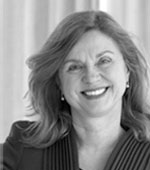
Her presentation is titled "Query Theory - Knowing what we want by arguing with ourselves".
Psychologists and behavioral economists agree that many of our preferences are constructed, rather than innate or pre-computed and stored. Little research, however, has explored the implications that established facts about human attention and memory have when people marshal evidence for their decisions. This talk provides an introduction to Query Theory, a psychological process model of preference construction that explains a broad range of phenomena in individual choice with important personal and social consequences, including our reluctance to change and excessive impatience when asked to delay consumption.
This presentation will take place on the Rose Hill Campus in Walsh Library's Freeman Hall. All university students are welcome.
Wednesday, April 3, 2013
Faculty Achievements - Dr. Fred Wertz
 |
| Fred Wertz, Ph.D. |
Dr. Wertz has recently published a book on qualitative data analysis entitled, “Five Ways of Doing Qualitative Analysis” (Guilford/2011).
Dr. Wertz is also currently president of the Interdisciplinary Coalition of North American Phenomenologists. In 2014, he is slated to receive the Society for Humanistic Psychology’s Rollo May Award for independent and outstanding pursuits of new frontiers in humanistic psychology.
A selection of Dr. Wertz’s published works can be found listed on his faculty Web page and in Fordham University’s research repository “DigitalResearch@fordham.edu”
Subscribe to:
Posts (Atom)


 Posts
Posts

